Article III · Libraries & Collections · Clause 3.1
Two Buildings With the Same Name
The word "library" covers two fundamentally different institutions. Understanding which one you're looking at changes everything.
- Instrument
- Clause 3.1
- Filed under
- Libraries & Collections
- Schedules attached
- 2
- Reading
- 3 min
Stack and Circulate
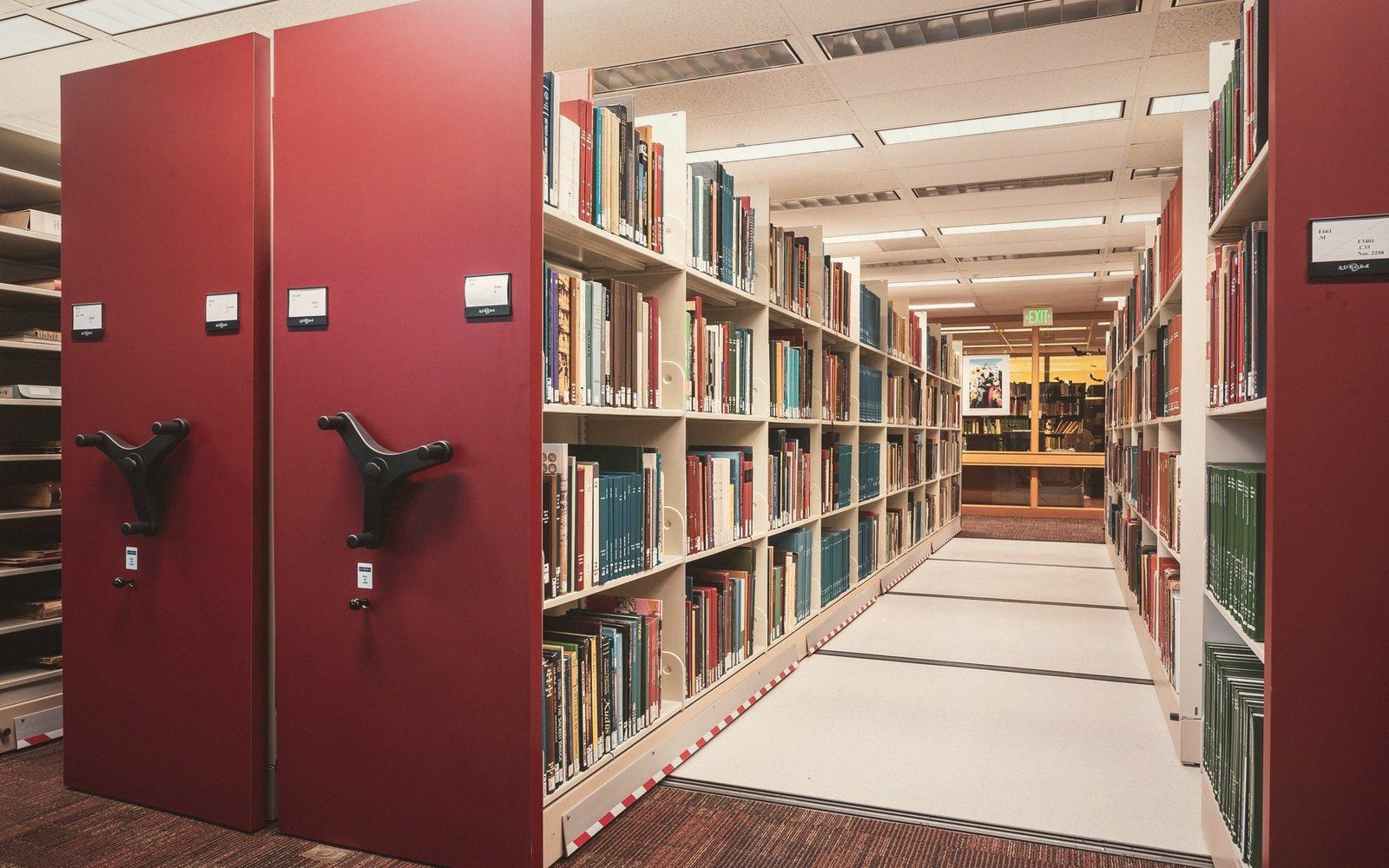
A research library is an archive that happens to be accessible. Its purpose is permanence: controlled humidity, stable temperature, acid-free enclosures, and load-bearing floors engineered to hold compact shelving that can reach eight or nine tiers high. Acquisition logic follows scarcity — rare manuscripts, runs of 19th-century periodicals, primary sources unavailable elsewhere. Nothing leaves the building except on formal loan between institutions. The catalogue entry is the point of access; the object itself is protected from handling.
A lending library operates on the opposite premise. Its purpose is circulation — materials moving out the door and back again. Shelving is open, browsable, and designed for easy reshelving by staff or patrons. Environmental controls matter far less because the collection turns over: a title that circulates heavily gets replaced when worn, rather than preserved when fragile. Acquisition logic follows demand, not rarity, with branch collections pruned regularly against usage data.
The architectural differences follow from these constraints. Stack architecture in a research library means floor plates reinforced to carry 150 pounds per square foot or more, minimal natural light to reduce UV degradation, and spatial sequences designed to move researchers toward rare materials under supervision. A lending library, by contrast, maximises natural light, open floor plans, and legible wayfinding — the design goal is ease of independent browsing, not controlled access.
Both buildings are called libraries. One is a vault. The other is a shop. Conflating them produces confused policy decisions, under-resourced preservation programmes, and acquisition budgets calibrated for the wrong purpose entirely.
Also in Libraries & Collections
Related clauses